Showing posts with label 2007. Show all posts

Wednesday, March 31, 2010

Quick Sip: 2007 Vouvray, floral but searing

Château Gaudrelle Vouvray, Sec (2007)
Château Gaudrelle
Chenin Blanc
Vouvray, Loire Valley, France
Chenin blanc
Another wine from our Loire Valley tasting. Vouvray is produced from the chenin blanc grape and can be dry to sweet. Always though you'll find a floral, "sweet" smelling nose. Like riesling, this grape can produces some truly deceiving wines.

Wednesday, February 24, 2010

WBW #66: Your Tenderest Two-Some, Dessert & Wine

Argyle Brut Rosé (2007)
Argyle Winery
52% Pinot Meunier | 48% Pinot Noir
Dundee Hills, OR
So today is Wine Blogging Wednesday #66 which is being hosted by Jennifer Hamilton, The Domestic Goddess. Combining two of my favorite things, Jennifer has joined WBW with Sugar-High Friday for today's challenge. We were asked to come up with a dessert and wine pairing.

Desserts can sometimes be difficult to pair with wines, and I think many of us first just jump to sweeter wines. Rule of thumb there is to make sure your wine is as sweet of not sweeter than your dessert, otherwise it'll taste sour. Also keep in mind tangy/tart flavors vs. savory/milky ones in your desserts. Based on that (is it apple pie or chocolate mousse?) you'll want to pay attention to the wine's acidity.

Since I tend to gravitate towards more acidic wines, and away from overly-chocolate'd (I know, there's not supposed to be such a thing... just think, more chocolate for you!) desserts my thoughts got a little bubbly. Lucky for us, Argyle is less than 30 minutes from here!

Tuesday, February 2, 2010

Patz & Hall Twitter Taste Live: Pinot, Chard and Tofu!

Patz & Hall
Chardonnay & Pinot Noir
Sonoma Coast, California
Last night was the launch of the Patz & Hall Winery page on Twitter Taste Live. They divided the country in two and had bloggers on both coasts do a tasting of two of their soon to be released wines. I was really pleased to see how seamlessly the upgraded TTL is working, and we had an enjoyable time tasting the wines.

Thursday, January 21, 2010

Spanish Wine Dinner at West Cafe

Tuesday night I headed out with some friends to Portland's West Cafe. There we enjoyed a six course dinner paired with different Spanish wines. Our group had two vegetarians (me included) and one vegan. So we really got the full gamut of offerings at our table. Overall the pairings were very well done, and so I'd like to share the menu with you and some of my comments.

Friday, January 15, 2010

Seven of Hearts - Part 2: Exploring Burgundy & Pinot noir

Hopefully you enjoyed the first part of this series of posts on Seven of Hearts.

Today we'll explore four different Pinot noirs which we tasted in their Carlton tasting room with owner and wine maker Byron Dooley. As mentioned, Byron's focus is to create wines that reflect the old-world French styles of Pinot noir from Burgundy. So let's start by briefly exploring this famous French region.

First and foremost, I love maps, and this is a useful one showing most of Burgundy.


Tuesday, December 29, 2009

Quick-Sip: 2007 Soléna Hyland Estate Pinot Noir - single vineyard complexity

Soléna Pinot Noir - Hyland Vineyard Estate (2007)
Soléna Estate
Pinot Noir
McMinnville AVA, OR
Third wine from Soléna Estates. This is another 2007 from a single estate.

Monday, December 28, 2009

Quick-Sip: 2007 Soléna Grand Cuvée Pinot Noir - fruity new world pinot

Soléna Pinot Noir Grand Cuvée (2007)
Soléna Estate
Pinot Noir
Willamette Valley, OR
The second of my reviews from Soléna Estate after a visit to their Grand Cru tasting room in Yamhill. This is one of the lower cost bottles of Pinot offered by Soléna, but certainly that shouldn't be taken to mean that it's lower quality.

Sunday, December 6, 2009

Visiting the Willamette Valley Vineyards Wine Center

So, "oe•no•phile HQ" has moved from the Midwest to the Pacific Northwest, and I'm excitedly getting to know my new home in McMinnville, OR (Mac for short). Arriving this past Thursday I was giddy to drive past many wineries and tasting rooms that I've been enjoying back in Ohio. Now living here I'll get to visit all of them and many others all the while tasting and writing about many new wines. I'm very excited for this adventure that will definitely help oe•no•phile to grow and help me in learning more about wines, new regions, and being a better taster/writer.

One of my first stops this weekend was to visit the newly opened Wine Center right here in downtown Mac, run by the folks at Willamette Valley Vineyards. The center is a tasting room of sorts for WVV but also so much more. In addition to their own wines, visitors can taste samples from other area wineries which change weekly. There is a small tasting fee, and the staff there is very knowledgeable and eager to help.

Thursday, October 29, 2009

You say Syrah, I say Shiraz

First, to be clear, Syrah and Shiraz are the very same grape variety. So the actual issue at hand is the pronunciation of "Shiraz" - some say sh-RAHZ while others say sh-RAZZ. The second is correct, much to the chagrin of anyone that deems those hard "A" sounds are just due to my being from the Midwest. It's okay, I've got the entire nation of Australia to back me up.

The grape variety in question has disputed origination, however is notably grown in France's Rhône Valley regions. Here the grape is known as Syrah (see-RAH) and is responsible for the famous varietals of Hermitage as well as blended with other varieties in Châteauneuf-du-Pape and surrounding Côtes-du-Rhône appellations.

In 1832 vine clippings found their way from Europe to Australia given the help of James Busby, a Scottish immigrant to the land down under. Through whatever means the grape came to be called Shiraz (sh-RAZZ) and is now perhaps the most notable, and certainly the most widely planted grape in the country.

The major difference between the wines of Syrah and Shiraz is stylistic. Both wines are full bodied and display a wide range of fruit characteristics. Berries, black pepper, and spice are common in either style. In France, Syrah seems to have more of an earthy, sometimes leathery quality. Shiraz in Australia on the other hand is often fruit-driven with jammy, ripe berry flavors that can sometimes edge out the more subtle earthy notes.

Thursday, October 22, 2009

Elk Creek Vineyards Offers Creepy Cuvées for Halloween

Ghostly White (2007)
Chardonnay
Bone Dry Red (2007)
Cabernet Sauvignon
Elk Creek Vineyards
Kentucky
*Wines received as samples
I recently received some wines from Elk Creek Vineyards in Kentucky. With the upcoming holiday these wines have been crafted to be welcome additions to a costume party. I'd like to share my notes on two of the wines released - a Chardonnay and a Cabernet Sauvignon.


Thursday, September 10, 2009

Wines of Mendoza - Twitter Taste ... not so Live?


So the folks over at Twitter Taste Live and Wines of Argentina are hosting an entire month of tasty wines. Getting "together" in small groups of oeno-freaks and producers, the aim is to have a small round table discussion online while tasting and promoting the wines via Twitter.

Last night was the Mendoza tasting and I got to take part - the (free) wines arrived on time, I acquired the appropriate cheeses, polished up my glasses, and logged in. Much to the group's chagrin Twitter was having a massive failure, and it was nearly impossible to have any sort of dialog. However, having popped all the corks in anticipation for the group tasting, I soldiered on and tasted all six on my own!

Monday, August 10, 2009

Quick-Sip: Lake Erie Gewurztraminer

Estate Bottled Gewürztraminer (2007)
Hermes Vineards
Gewürztraminer
Lake Erie

Saturday, August 8, 2009

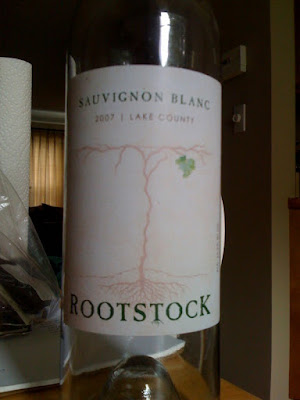
Quick-Sip: Value California SB

Rootstock Sauvignon Blanc (2007)
DnA Vineyards
Sauvignon Blanc
Lake County, California


Thursday, August 6, 2009

A modern romance of the white grape variety

Con Class Rueda (2007)
Sitios de Bodega
60% Verdejo | 15% SB | 25% Viura
Rueda, Spain
Verdejo - a bold, acidic grape reared on the arid plateaus of Spain. Sauvignon Blanc - a flirtatious, aromatic white French variety cultivated in the classiest neighborhoods of Bordeaux. Two star-crossed lovers separated by the Pyrenees and kept apart speaking two different languages of love... that was until "Rueda." Imagine that in big, bright, flashing, neon lights. It would definitely sell. Despite the lack of singing, choreography, and melodrama I'd say we've got the vinous version of West Side Story on our hands here.

While I wait for Broadway and Hollywood to flock to my door to get the exclusive rights, I'll focus more on a yummy new Spanish wine I had the other day - Con Class Rueda produced by Sitios de Bodega.

Monday, July 13, 2009

un petit séjour à la cote d'azur

Sunday was another epically gorgeous summer day here in Cleveland. I really don't know what we've done to deserve such a great summer this year. Regardless, it was the perfect setting for a poolside wine tasting with a good number of the folks from Bonjour Cleveland!, the French language Meet-up group I run.

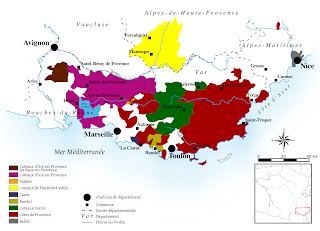
Exploring the wine regions of France since February, our glasses have traveled nearly everywhere - Burgundy, Bordeaux, Alsace, Champagne, and the Loire. This month the group chose to sample the wines of southern France including Provence, Languedoc, and Roussilon (often considered together with the Languedoc). Hosted by George at his lovely home in the village of Chagrin Falls (quel drôle nom, eh?) we were anything but chagrined by the gorgeous garden, the sunny skies, and the lovely wines of the Côte d'Azur. (Note- technically the Côte d'Azur runs from Italy just into the Provence region... but hey, it sounds nice!)


Thursday, June 18, 2009

Leading a revolution with a boisterous Pinot Noir

Mark West Pinot Noir (2007)
Mark West Winery
Pinot Noir
California
You would never guess by the unassuming bottle and its lack of pizazz that the people behind this Coastal Pinot Noir are planning a revolution. But more on that below, let's talk grapes and locations.

Pinot Noir is a red grape variety that is best known as the grape of Burgundy, France. These iconic French wines are often light in color with moderate acidity, and flavors ranging from cherry and strawberry to smoke and truffles. Prices can range widely from cheap, large sourced table wines to exclusive age-worthy, single vineyard bottles. Annually the Hospices de Beaune holds a charity auction that sets the price-level for many of the region's wines at the Hôtel-Dieu with its tiled roof and Flemish inspired architecture.

Monday, June 1, 2009

Mineral-driven white from gravely Graves

Clos du Hez Graves (2007)
Clos du Hez
50% Sauvignon Blanc | 50% Sémillon
Graves AC, Bordeaux, France

While the red wines of Bordeaux, located in south western France, are famed as some of the best wines in the world, the region also produces excellent quality white blends. Produced in small quantities throughout the larger wine region, the best known white blends come from Graves, the only sub-region with a classification for dry whites. Sauternes, a smaller region within Graves, is famous for the production of sweet dessert wines using grapes which have been affected by Botrytis cinera, or Noble Rot. Grapes found in both sweet and dry wines are limited to Sémillon, Sauvignon Blanc, and Muscadelle.

As might be implied by the region's name, the soil type is consistently gravely. Left behind from glacial movement along with a quartz deposits, the soil takes a particular effect on wines. The concept of terroir, or a sense of place, is strongly considered all over France. The concept allows that not just grape variety and vinification methods are responsible for the final wines. Indeed soil types, weather, and climate bear their own influences. This said, you can always count on a good dose of minerality in dry whites from Graves.
Appearance: Clear, pale golden yellow wine. The color of watered down ginger ale is best thought of with this wine.

Nose: Clean nose with moderate intensity, displaying qualities of green fruit, pear, apple, grapefruit, and tart stone fruit. Additionally there is a balanced level of mineral aromas including slate, granite, or wet chalk.

Palate: Dry wine with fresh acidity, not unlike lemon spritzer. Light to medium bodied, medium alcohol, and moderately intense flavors all balance themselves well. Citrus and mineral qualities are predominant. Grapefruit, lemon, and grassy notes. A long finish from the acidity leaves an enjoyable, fresh taste of nectarine.
This particular bottle is produced using fifty per cent Sémillon and fifty per cent Sauvignon Blanc. The former tends to produce bland, low acid wines that pair well with oak aging while the latter creates intensely aromatic high acid wines. Blending the two wines together allows for better balance of each grape, and a richer overall experience. The grassy, austere qualities of Sauvignon Blanc are tempered by Sémillon, while the opposite lends aroma, higher acid, tones down alcohol levels. Sémillon is popularly grown in both South Africa and Australia while Sauvignon Blanc is grown all over the world, notably in the Loire, New Zealand, and Chile.

Whenever I have Sauvignon Blanc I crave Chèvre - this goat cheese is a perfect compliment to the grassy, citrus characteristics, and would pair well with this wine in particular. This light bodied wine would be perfect on it's own, before a meal, or paired with a light dish. Stick to citrus flavors as well as things like artichokes or asparagus.

Whether you're familiar with Bordeaux reds or not, I'd highly recommend giving a few of the white wines a fair shot. They offer a lot of flavor and much like the Clos du Hez, can be found inexpensively. Style is almost completely dependent upon the per cent of each grape found in the blend, but more importantly don't disregard the idea of terroir. Compared to similar blends found in the U.S. and other new world locales, there will be similarity but a definite difference overall.

Cheers!

Thursday, May 14, 2009

Creamy Columbia Chardonnay

Chateau Ste. Michelle Chardonnay (2007)
Chateau Ste. Michelle
Chardonnay
Columbia Valley (Wash.)
I might be slightly biased towards this wine, because I am absolutely head over heels in love with this winery. I have never picked up a bottle of CSM that I didn't adore. Both flavorful and aromatic wines, everything from their line that I have samples is very approachable. I immediately recommend their Gewurtz and Riesling to people who like fruit-driven but crisp whites. See previous review for a perfect summer wine. And a recent bottle of their Cabernet Sauvignon made my toes tingle with delight.

I was browsing American whites at Whole Foods, and found myself looking at Chardonnay. I don't know what it's been with me and Chard lately, but I've been drinking a lot of it. I think I'm trying to subtly force everyone to like them! I get why people are down on Chard, but really there are so many good ones out there that no one has given a second thought to. Really, go out and find one you like. Consider it a little secret that you don't have to tell anyone about.

So, without further pomp, here are my notes - I tried to keep the raving to a minimum - on this particular bottle:
Appearance: Clear with a medium lemon yellow color. Probably one of the more yellow hued wines I've seen a while.

Nose: Clean, medium intensity, youthful but developing. This wine is only 2 years old but it has some great development from the oak and sur lie aging. Buttery - like movie popcorn or butter cookies - yellow apple, soft citrus, flan, crème brûlée, caramel, vanilla, and white blossoms.

Palate: Yum! Dry, full bodied wine. Medium acidity, alcohol, and flavor intensity. The length goes for a long time. Mellow citrus, stone fruit like peaches, smooth oak integration, buttery, biscuit (malolactic), melon, kiwi, vanilla, and almond.

Complex, dry, soft acidity, full body. This is by no means overpowered with oak, but has just enough to make a powerful statement with many a meal. Pair this wine with creamy cheese (brie, camembert), cream based soups, lentils, any kind of dish based on a creamy or buttery sauce. And pastry. Good lord drink this wine with buttery pastries with just a little fruit.

Now I'll admit, whilst I'm nuts over the winery, I still kind of like the Blue Fin I had last time a little better. The oak integration of this bottle, and the wonderful layers of complexity from the sur lie aging are fabulous, but I like a touch more acidity. Lower acid wines don't have the perception of feeling as refreshing. Consider the difference between drinking a glass of whole milk versus a glass of ice water on a hot, muggy day.

Just drink some Chardonnay, dammit! You'll be better off having done so.

Cheers!

Thursday, March 12, 2009

deutsch wein ist gut mit thai essen ja

Clean Slate Riesling (2007)
Clean Slate Wines
Riesling
Mosel, GERMANY
On recommendation from Crighton, one of the friendly specialists at my local Whole Foods, I snagged a bottle of Clean Slate to pair up with some Pad Thai. Eagerly he chilled a bottle and let me sample it in the store, and I definitely knew I'd be writing about it before long. Now later in the week I've got a new bottle and some notes to share (well, I might not share the bottle...)
Appearance: Clear, pale lemon yellow with a little pétillance, or effervescence.

Nose: Clean with light to medium intensity. Youthful aromas including green apple, lemon, lime, pineapple, slate, and anise star.

Palate: An off dry wine - 2.8% residual sugar - with medium acidity, body and light alcohol. Intense fruit flavors characteristic of the variety including apple, citrus, and lime. Also some pear, orange, and floral notes finished with a soft minerality.
The very subtle sweetness this Riesling has made it a perfect pairing for my Pad Thai with a little spiciness and fresh basil and lime tossed in. However, I'd definitely recommend it to anyone who enjoys a dry Riesling - this definitely is refreshing and crisp given the lively acidity to balance it.


View Larger Map
The label - which would certainly appeal to any minimalist - is also notably cool. A narrow band of paper depicting a stylized (to look like slate of course!) aerial of the Mosel River makes the bottle look like it's wearing a pair of skinny legged jeans. The Mosel region, taking it's name from the river is home to some of the world's best Rieslings. Zoom out on the map above to get a better idea of how the river winds through wine country. The southern facing slopes are where the best grapes are grown.

The region used to be known as the Mosel-Saar-Ruwer, but apparently that wasn't very "consumer friendly." Granted yes, most bottles of wine imported from Germany have horribly confusing labels, it'd be hard to go wrong with many of their Rieslings. "Americanizing" labels is understandably easier to market, but I have to say that as Americans (or anyone outside of a given country) we should make the effort to be a little more educated about these things. And if you can't read a label then ask for help, you might miss out on some great wines otherwise. While you're practicing your Deutsche though you can safely enjoy this wine.

Cheers!

Wednesday, February 11, 2009

stop hating on rosés!

Les Jamelles Cinsault Rosé (2007)
Les Jamelles
Cinsault
Pays d'Oc, France
So Valentine's Day is this weekend, and like so many others I'm writing about rosés. Other than their pink color - gotten from letting the juice sit on the red skins very briefly - I don't really know what other relation or connection can be made to this holiday, but I do know one thing - I'm sick and tired of people trashing rosé! Now that might seem a little stand-offish, but seriously, these people need to knock it off. And apologies if you're one of them, but keep reading friends!

Let me say that I get the perception that some people have - "All rosés are sweet, and I don't like sweet wine." Thanks to Sutter Home, American minds have been tainted by gallons and gallons of White Zinfandel, and now anytime someone sees rosé that's their first thought. They clearly had a brilliant marketing team behind them to get that kind of product association, and if White Zin is all you drink then cheers to you too!

However, for any non-sweet drinkers, it's time to cut rosés some slack and belly up to the bar, so to speak. Oh, and just because it's pink doesn't mean it's a girly wine either - in fact this bottle of Cinsault might be one of the "manliest" pink wines I've had!
Appearance: A clear wine, pink in color near salmon. Pale in intensity.

Nose: Clean, with medium intensity, and youthful aromas. Apple, raspberry, cherry, and pomegranate dominate the nose. Some stony minerality, strawberry, and rose round things out.

Palate: A dry, medium bodied wine with zingy acidity - mouth watering and refreshing. Medium intensity flavors of red cherry, apple, raspberry, and soft oak. Very slight fruit tannins that only linger for a moment.
Being a high-yielding, thick-skinned grape that is drought resistant, Cinsault is a big performer in the South of France (southern Rhône, and Languedoc-Roussillon regions) and it has also found a home in Africa, Australia, and the US. Typically blended with other local varieties it is a deep red wine that boasts a lot of fruit, and smooths other harsher wines out.

It is also used to make some outstanding dry rosés, wines that southern France should best be known for. With crisp, refreshing acidity these wines are perfectly fit for seafood and warm weather. This bottle of Jamelles was the perfect fit for a mushroom and Gruyere pizza I got at Fire Food & Drink, a local favorite. The wine cut through the saltiness, and complimented the earthy mushrooms and sweet caramelized onions splendidly.

Historically rosés are meant to be dry - white Zin was a lucky mistake - and can range from light and easy to very complex wines. For the doubters out there I can also recommend rosés produced from Grenache, Sangiovese, and Syrah. Here are some of my favorites:
Barnard Griffin Rose Of Sangiovese (WA)
Trentadue Winery Grenache Rose, Monte Lago Vineyards (CA)
Tsantali Roditis (Greece)
Château Pavie Macquin Rosé (BDX, FR)
Hope this has inspired - or at least goaded - you to run out and find a rosé to try. Sure, I maintain not everyone is going to enjoy them, but don't write them off before you've tried them all!

Cheers!