Soléna Pinot Noir Domaine Danielle Laurent Vineyard (2006)
Soléna Estate
Pinot Noir
Yamhill-Carlton AVA, OR
Soléna Pinot Noir Domaine Danielle Laurent Vineyard (2006)
Soléna Estate
Pinot Noir
Yamhill-Carlton AVA, OR
Soléna Pinot Noir Willakia Vineyard (2006)
Soléna Estate
Pinot Noir
Eola-Amity Hills AVA, OR
Soléna Pinot Noir - Vista Hills Vineyard (2006)
Soléna Estate
Pinot Noir
Dundee Hills AVA


.jpg)

Altozano (2006)
Finca Constancia
Tempranillo 65% | Cabernet Sauvignon 35%
La Mancha (Vino de la Tierra de Castilla)

Old Vine Zinfandel (2006)
Sineann
Zinfandel
Columbia Valley
 This month for Wine Blogging Wednesday, the fifth anniversary of the project, we've been "burdened" with the task of drinking Zinfandel. Seeing as this is one of my favorite varieties, I really didn't anticipate any issue. The only problem was choosing what bottle yummy California Zin to choose - then the clouds opened, and it all became clear. Not California... but Oregon Zin!
Can Blau Montsant(2006)Spain's system of classifying wine regions isn't as old as France's, however it can sometimes be just as confusing. Denominacíon de Origen (DO) laws were first enacted in 1932 and revised in 1970. It wasn't until 1996 that the country established the current tiered system of quality wines produced in specified regions (QWPSR for you fellow wine nerds) in line with EU policy. Even more recently, there have been two additional levels created - Denominacíon de Origen Calificada (DOC) and Denominacíon de Pago. Within the former there are only two regions which have achieved this status - Rioj a and Priorat known for wines made from Tempranillo and Garnacha respectively.
Cellars Can Blau
40% Mazuelo (Carignan) | 40% Syrah | 20% Garnacha (Grenache)
DO Montsant, Spain
Incredible Red (2006)So even before I get too far into talking about why this wine makes me crave breakfast, let's
Peaachy Canyon Winery
Zinfandel
Paso Robles, California
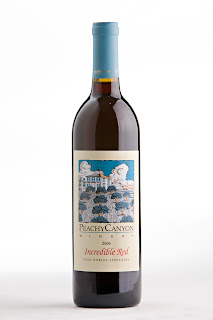 take a quick look at the grape variety - Zinfandel. This "American" grape came up in a post not long ago, being related to both Primitvio as well as the obscure Croatian variety, Crljenak Kaštelanski. However, this is Zin in my preferred format - and it's not pink! Disturbingly, White Zinfandel, still perpetuates the minds of many Americans, and makes it rather hard to talk about some of the amazing wines the grape produces.
Fleur du Cap Pinotage (2006)Considering the different areas of the world that make up "new world" wine production, Africa might not necessarily come to mind. However, wine has been an important industry there since at least the mid 1600s. Laws regulating wine produced in a specific region were not set however until 1973, when the Wine of Origin system was introduced. Similar to other countries' controlled appellation laws, the WO requires that wines must use only grapes from one region to be labeled under the area's name. Also, an expansion of investment in the South African wine industry has been fostered by increased international exposure.
Bergkelder
Pinotage
Coastal, South Africa
Marlborough Dry Rielsing (2006)I'm not one to pass up a bargain - especially when it comes to wine! Recently I was shopping to stock up on some white wines and found a $16 bottle marked down to $8.99! Knowing the Kim Crawford name, I'd never actually sampled any of his (yes, Kim is a man - I had assumed surely it was Cindy's less attractive wine-making sister) wines. Even though seeing mark downs like that usually indicates that a vintage is on its way out, I bought a bottle anyhow. I had no intention on laying it down for more than a few days!
Kim Crawford
Rielsing
Marlborough, AUSTRALIA
Appearance: Brilliant and clear with just a slight hint of fizz. The color is somewhere between that of fresh hay and a golden wedding band.Based on this tasting I would definitely have to say that my perception of this wine nearing it's peak is way off. With all the acidity and fullness this has it could certainly age for a while - I'm going to have to go get a couple more bottles at that price! Also, while this is excellent served on its own I'd jump at the opportunity to pair this with food - well, then again when don't I jump at a chance to eat? Fatty fish, sharp cheeses, and fruit dishes would do very well matched to this wine. I'm sure it would be an excellent compliment to sushi as well.
Nose: Boasts of minerality - the smell you might notice along a riverbed in the spring - fresh, stony, earthy. This is my no means off putting, and in fact common in Rieslings, developing more as they age. Limes cut with a freshly sharpened knife also come to mind. The aromas are by no means intensely pronounced, but they are not hard to distinguish. Softening the hard line steeliness are floral notes as well as hints of peach, lemon, apple, and pineapple.
Palate: Holding the wine on my tongue the first thing I notice is how it prickles all over including the roof of my mouth. After swallowing I start salivating due to the high acidity. The label doesn't lie - this is a dry Riesling! The body, alcohol, and flavor intensity are all leaning towards the heavier end of medium. Flavors are bright and fresh - lime, apple, and lemon. Just as with the nose there is that sense that perhaps I just stuck a small pudding stone or piece of chalk in my mouth. The acidity lingers for a long time and is incredibly refreshing.
Visión Gewürztraminer (2006)I really love Gewürtzraminer, but the first time I tried this one I wasn't a huge fan. I'm not really certain why I even picked another bottle up other than I just felt the need to stock up on every day, approachable white wines. I opened this new bottle last night just to have a glass while I watched TV, and as before it struck me that for what it is it was far to hot, or had out of balance alcohol. I stuck it in the fridge and went to bed.
Cono Sur
Gewürztraminer
Casablanca Valley, CHILE
Appearance: Clear pale wine with a bright golden color.I am incredibly excited about this wine now - it's not often you come across a new-world white with so many layers of complexity. I found myself scribbling more and more notes as I picked up new aromas and flavors. The best part was seriously the finish - peach, peach, peach.
Nose: With a few swirls, and the glass still sitting on the table, the aromas were already flirting with my nose. Pronounces and aromatic, slight indication of age, and very complex aroma levels. Up top was a perfume of dried flowers and honey. Deeper into the glass fruity aromas including ripe apple, pear, and peach come through. Minerality, like chalk, ginger, and some mint complete the bouquet.
Palate: Dry with higher than average acidity, alcohol, and body. Not out of balance though like when I opened it. On the palate there was a slight carbonation and the minerality showed up again reminding me of tonic water. Tropical fruit, apple, lime, and lychee. An outstandingly long finish (5+ seconds) with a resounding flavor of peach and nectarine-like I'd just finished eating one.
Schramsburg, Mariabelle Brut NV ($25.99)Pale golden yellow sparkling wine. Moderate aromas of apple, citrus, pear, and minerality. Dry, medium body with lively acidity and flavors of apple and lemon with full mousse. Great to pair with creamy cheeses, salty meats, and savory olive oil.
Proscuitto, arugula, pistachio, green apple & Laura Chenel chèvre
Stag's Leap Viognier 2006 ($26.99)Pale, golden, clear wine. Light, youthful aromas of citrus, apple, and floral. Dry with smooth acidity and soft flavors of oak and lime, slightly balmy. Bland light wine accentuated very well by bitter greens and vinaigrette.
Braised radicchio, morels & sea scallops with apple-bacon vinaigrette
St. Supéry Virtu, White Meritage ($29.99)Pale yellow wine. Moderately aromatic aromas of oak, yellow apple, and orange blossom. Dry, medium body, smooth acidity and flavor of oak, butter, and citrus. Characteristics bursting through when paired with lemon, herbs, and high acid fruits.
Thyme crusted cod, cranberry, bean & squash ragoût, rapini, preserved lemon aiolo
Domaine Chandon Pinot Meunier 2006 ($32.49)Pale garnet red wine - similar to Pinot Noir. Moderate, youthful aromas of cherry earth, strawberry, orange, and licorice. Dry with crisp, lively acidity, soft tannins, and flavors of cherry and currant. Balanced well with roasted foods and vegetables.
Poulet ballentine, sourdough, sage, currant & apple with caramelized brussel sprouts & pan jus
Kuleto Sangiovese 2004 ($32.49)Deep, ruby red wine. Developing, moderate aromas of mushroom, earth, herbs, oak, and dried fruit. Dry, full bodied wine with high acidity and medium tannin. Flavors of oak, black fruit, and game. Braised meats and root vegetables softened tannin and bolstered fruit.
Slow braised oxtail, root vegetable & pork belly hash, mushroom bordelaise
Robert Pecota Muscat Canelli 2005 ($19.99)Medium green-gold wine with noticeable viscosity. Fully aromatic with some age, peach, pear, straw, floral, honey, and olive characteristics. Sweet, medium bodied, with powerful flavors of apple, peach, pear, honey, and floral. Fantastic contrast to salty and tangy flavors of bleu cheese, and compliment to fruit.
Fromage trio: Cypress Grove Humboldt Fog and reduced grapes, walnut, honey; Pt. Reyes Blue and cardamom poached pear, moscato sauce; Vella Dry Jack and fig & marsala preserves
California Cabernet Sauvignon (2006)For people who like red wines, the most common request we have at the winery is for Cabernet. I’ve come to understand that people mean Cabernet Sauvignon, and have rarely, if ever, considered the lonely parent of the California great - Cabernet Franc. Scientists have determined that through a natural coincidence Cabernet Franc crossed with Sauvignon Blanc to result in what we know today as Cabernet Sauvignon. Given the relationship between these two wines you might expect that any Cabernet will do, but in fact each has its own unique profile, and appeals to widely different palates. Today we’ll take a look at both in order to better understand their individual attraction.
Bogle Vineyards
Cabernet Sauvignon
Graton, CA
Isle St. George Cabernet Franc (2006)
Firelands Winery
Cabernet Franc
Isle St. George AVA (Lake Erie)
Cabernet Franc is a red grape variety that is early to ripen compared with other varieties. In addition to this it tends to do very well in cooler climates – including Northern Ohio and other areas around the Great Lakes! Being lighter in body, acidity, and tannin but more aromatic, Cab Franc has long been an important component of the renowned blends from Bordeaux, France. The other two grapes most commonly found in these are Merlot and Cab Sauvignon.Firelands Winery 2006 Isle St. George Cabernet Franc
Appearance: Clear, ruby red in color which is light enough to easily read text through.
Nose: Clean and aromatic. Stand-by green bell pepper with softer earthy notes and fruit including raspberry and blackberry. Oak, leaves, mushroom, and tobacco.
Palate: Dry with medium body, acidity, and tannin. Sticky but doesn't linger too much into the finish. Spicy on the palate with pepper, some oak, sour cherry, cedar, and raspberry.
Cabernet Sauvignon unlike Cab Franc, is a later ripening variety. Weather and climate permitting, this means the fruit requires a lot more time on the vine and more sunlight. Thus it grows very well in places like California, South America, and Australia which all offer longer growing seasons and lots of sun. Again considering Bordeaux blends, Cab Sauvignon is used to beef up the body, tannin, and fruit characteristicsBogle Vineyards 2006 California Cabernet Sauvignon
Appearance: Also clear with a ruby red color, but deeper in intensity - text is visible bot not clearly legible.
Nose: Clean and pronounced - oak (dill, American Oak?), cherry, currant, blackberry, with some spice. I strongly associate the nose on this Cab with California.
Palate: Dry with really grippy tannins, full bodied, and quite a bit of acidity. Oak and fruit dominate the palate, but more like cooked fruit or jams. Currant, cherry, and blackberry. Also a hint of licorice and a lot of chocolate on the long finish.
 importantly it should be noted that both varieties are excellent to pair with foods, and so make great dinner wines. And if you enjoy dark chocolate I would highly suggest having some with either Cabernet. Overall Cab Franc appeals to people who enjoy dry wines that are lighter in body and not over the top fruity like some Cab Sauvignons can be. For those who really love “fruit bombs” as they are called or who want a fuller bodied wine Cabernet Sauvignon is just the thing.
Furnace Brook WineryCurrently I'm trekking through the cold and snowy landscapes of western Massachusetts with my friends Lindsay and Danielle in what is known as the Berkshires. We've been looking at bed & breakfasts for their March wedding, and having spent the entirety of Thursday with that I decided that today we needed some wine! From our "base" in Pittsfield, MA we drove about 10 miles to visit Furnace Brook Winery and Hilltop Orchards.
Location: Richmond, MA
Owner: John Vittori
While John helped some other patrons who had come to snowshoe around the property, I had an opportunity to speak with Rob Todd one of Furnace Brook's winemakers. Rob has a background in brewing beer and came from a local brewery to lend his experience to Furnace Brook. He explained that while beer making can have more complexities - where as wine is made from grapes, beer can be brewed by any number of materials - the physical process isn't anywhere as involved or complex as that of winemaking.Chardonnay Special Reserve - Softly oaked and full bodied this wine offered mild acidity and soft finish. Citrus and apple balance the oak flavors. Charval- A blend of Seyval Blanc (60%) and Chardonnay (40%) this wine was softer than the Chardonnay. A little more citrus/apple fruit and lighter oak for more of a medium body. Dry Riesling - Even with 1.3% residual sugar (RS) this is certainly a dry wine. Aromas and flavors of peach, apple, and lime the moderate acidity would pair well with food. My favorite white. Johannisberg Riesling - With 2.7% RS, this wine boasts a lot of the same fruitiness of the Dry style but with more noticeable sweetness and an added element of tropical pineapple. Merlot Special Reserve - Medium bodied dry wine with soft tanning and cinnamon and blackberry notes. Soft oak and red fruit on the finish. Cabernet Sauvignon Special Reserve - Full bodied dry red wine with spice and blackberry, higher tannin levels and moderate acidity would make this a great food wine. Shiraz Special Reserve - Chocolate, cherry, and spice! Full bodied, juicy, fruit-forward wine with smooth notes of chocolate and coffee compliment the palate and leave a long lingering finish. My pick of the reds. Sparkling Blanc de Blancs - A fun dry sparkling wine with medium acidity and crisp apple characteristics. Sparkling Muscato - Apple, peach, apricot, and pineapple made this wine a lusciously sweet after-dinner treat. "Bee My Honey" Mead - Made from honey this had interesting herbaceous qualities with a lot of floral aromas. Sweet and fruity, but not overbearing. Johnny Mash Hard Cider - light with mild acidity. Fresh fruit juice is added after fermentation to give the cider an additional sweet and fruity profile. Furnace Brook's complete wine list
Blanc d'Alsace (2006)Today's wines takes us to the heavily Germanic influenced region of Alsace in northeastern France. This area has changed hands between France and Germany a number of times throughout history, surely due to both wanting to claim the great wines produced there as their own! The only region in France that is permitted to use German grape varieties under the AOC system, Alsace is primarily known for white wine (90% of production) from aromatic varietals including Riesling and Gewürztraminer.
Maison Kuentz Bas
60% Sylvaner | 15% Muscat | 15% Auxerrois | 10% Chasselas
Husseren-les-Chateaux, France
Crustacés (2007)
Dopff & Irion
Riesling
Riquewihr, France
Alsace Pinot Noir (2006)
Robert Klingenfus
Pinot Noir
Molsheim, France
Blanc d'AlsaceThis was an interesting blend focused around some of the lesser known grapes found in Alsace. Sylvaner, Muscat, and Chasselas make up less than 15% of grapes grown and have declined in popularity over the years. Auxerrois is often grouped with Pinot Blanc because of their similarities and is considered to be a relative of the Chardonnay grape. Just on a whim I sampled this with some French goat cheese and it was killer. This is a definite food wine.
Appearance: Clear white wine with medium color, somewhere between gold and straw. I wouldn't go so far as to call it "deep" in color, but it's almost there. Very distinct from lighter whites like Pinot Grigio.
Nose: Clean, developing in age, light oak, pronounced minerality, and unmistakable lemon or other citrus aromas. There is a slight smoky, almost greasy level to the nose - which isn't bad - and very soft pear at the top of the glass.
Palate: Holy cow! Huge acidity, mouth watering and it continues well into the finish. Dry wine with medium alcohol (12.5%), full body, and a long finish. Bursting citrus including lime or lemon but above all else grapefruit. Almost like grapefruit rind. A little oak and herbaceous characteristic, as well as the same minerality from the nose.
CrustacésProducing mostly dry wines, Riesling in Alsace is held in the same high regard as those from Germany. Anyone who avoids Rieslings because of the undue presumption that they are all sweet definitely needs to get a bottle of this. Shrimp and steamed mussels with some lemon and lavender were wonderful paired with this.
Appearance: Clear with a pale golden color. The wine shimmers brightly at the edge of the glass.
Nose: Clean and youthful with moderately intense aromas including lime, pear, apple, and tropical fruit. The nose for this wine is screaming Riesling - fresh green apple is the predominate aroma blending with some pineapple. The other aromas of pear, peach, and floral are all mostly at the top of the glass and much softer.
Palate: Zing again! Dry with moderate to high acidity - my eyes are watering a little here - full bodied wine with medium alcohol (12%) and a long finish. That granny smith continues to fight for the spotlight with an added level of lime. Acidity that has my mouth watering and cheeks twinging.
Klingenfus Pinot NoirThe cherry flavors in this wine were more reminiscent of those tart yellow ones you can find. The combination of tart fruit and earthiness that this wine has really makes it a great example of an old-world style Pinot Noir. I enjoyed carrots and mushrooms seared in wine and butter and seasoned with French herbs with this.
Appearance: A clear, pale red wine. Color is bright and fresh looking - almost a cranberry red.
Nose: Clean with some development, moderate aromas. Lots of red fruits, including strawberry and crab apple, but mostly cherry. Very soft wafts of earthiness and a little dried fruit suggests the old-world origins and development that comes with aging.
Palate: Dry medium bodied wine with bright cranberry-esque acidity. Medium tannins noticeable on gums, medium alcohol (12.5%), with a lengthy finish. Surprisingly the first noticeable flavor was mushroom right at the front of my mouth - some of my favorite wines taste like fruit and dirt! Past this there was a lot of cranberry and cherry as with the nose. Also some hints of strawberry lingered on the finish.

 Posts
All Comments
Posts
All Comments


.jpg)


