Showing posts with label blends. Show all posts

Friday, March 26, 2010

Quick Sip: NV Crémant de la Loire - herbal yeasty goodness

Carte Turquoise Crémant de la Loire (NV)
Domaine des Baumard
Chenin Blanc & Cabernet Franc
Loire Valley, France

This is the first of a series of tasting notes from a Loire Valley focused tasting I took part in with some other industry folks recently. Enjoy!

Wednesday, February 24, 2010

WBW #66: Your Tenderest Two-Some, Dessert & Wine

Argyle Brut Rosé (2007)
Argyle Winery
52% Pinot Meunier | 48% Pinot Noir
Dundee Hills, OR
So today is Wine Blogging Wednesday #66 which is being hosted by Jennifer Hamilton, The Domestic Goddess. Combining two of my favorite things, Jennifer has joined WBW with Sugar-High Friday for today's challenge. We were asked to come up with a dessert and wine pairing.

Desserts can sometimes be difficult to pair with wines, and I think many of us first just jump to sweeter wines. Rule of thumb there is to make sure your wine is as sweet of not sweeter than your dessert, otherwise it'll taste sour. Also keep in mind tangy/tart flavors vs. savory/milky ones in your desserts. Based on that (is it apple pie or chocolate mousse?) you'll want to pay attention to the wine's acidity.

Since I tend to gravitate towards more acidic wines, and away from overly-chocolate'd (I know, there's not supposed to be such a thing... just think, more chocolate for you!) desserts my thoughts got a little bubbly. Lucky for us, Argyle is less than 30 minutes from here!

Friday, January 22, 2010

WBW #65: Snow Day Wines - Bodegas El Nido 2003 Clio Jumilla

Clio (2003)
Bodegas El Nido
Monastrell 70% | Cabernet Sauvignon 30%
Jumilla DO, Spain
This month's Wine Blogging Wednesday topic (No. 65) hosted by Michelle Lentz was choosing a wine that you'd enjoy drinking during a full out precipitous attack of the white stuff. Thankfully, since moving to Oregon I've only had to "endure" the snow once, while I know back in Ohio and most of the Midwest in general they got pretty much slammed. Thanks Lake Erie!

That said, I think I had a pretty good idea as to what kind of wine I was in need of - big body, dried fruits, and a warmer level of alcohol. My first choice? Port of course - and I think a lot of people turned there at first. But then something shiny caught my attention. A bottle from El Nido (The Nest) winery in Spain. The pearlescent label was really familiar, and it turns out I sampled another of their wines in my Spanish Wine course last year.

Thursday, January 21, 2010

Spanish Wine Dinner at West Cafe

Tuesday night I headed out with some friends to Portland's West Cafe. There we enjoyed a six course dinner paired with different Spanish wines. Our group had two vegetarians (me included) and one vegan. So we really got the full gamut of offerings at our table. Overall the pairings were very well done, and so I'd like to share the menu with you and some of my comments.

Thursday, January 14, 2010

Seven of Hearts - Part 1: White Wines

We joined owner and wine maker Byron Dooley for a flight at the Seven of Hearts tasting room in Carlton, OR. With a proclivity for old-world style French wines, Byron and his wife Dana moved to the Willamette Valley after leaving their tech careers in Silicon Valley and establishing their passions in Napa. Dana is the owner of locally based Honest Chocolates with two locations and a candymaking kitchen in the same space as the tasting room.

Inspired by classical French wine labels, the wines at Seven of Hearts depict an old playing card embellished with a crest-like image of one of the couple's cats, Seven.

I'll be sharing my tasting notes for these wines in thee parts this week - our first tasting notes will cover the two whites that Byron shared with us.

Tuesday, January 12, 2010

Quick Sip: 2005 Soléna Wooldridge Creek Zinfandel - another for the "dont like" Merlot crowd

Soléna Wooldridge Creek Vineyard Zinfandel (2005)
Soléna Estate
Zinfandel 96% | Merlot 4%
Applegate Valley AVA, OR
The third warm weather varietal tasted at the Carlton, OR tasting room with Lynnette.

Monday, January 11, 2010

Quick Sip: 2005 Soléna Wooldridge Creek Merlot - for those that "don't like" Merlot

Soléna Wooldridge Creek Vineyard Merlot (2005)
Soléna Estate
Merlot 96% | Zinfandel 4%
Applegate Valley AVA, OR
The second of four warm weather varietals offered by Soléna. We tasted the Merlot at the tasting room in Carlton with Lynnette.

Saturday, October 10, 2009

Quick-Sip: Traminer makes a fruitier Silvaner

Trautberg Silvaner und Traminer trocken (2008)
Castell Winery
Silvaner 80% | Traminer 20%
Franken, Germany

Sunday, September 13, 2009

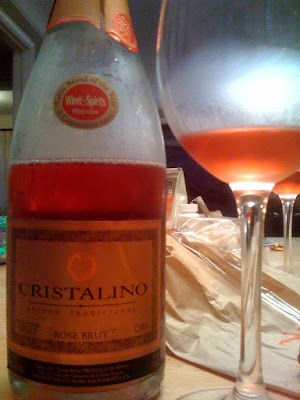
Quick-Sip: Think Pink, part 1

Cristalino Rosé Brut (NV)
Bodegas Juame Serra
Pinot Noir 60% | Trepat 40%
Cava (Costers del Segre or Conca de Barberá D.O.)

Thursday, September 3, 2009

Quick-Sip: Tempranillo/Cabernet blend from La Mancha

Altozano (2006)
Finca Constancia
Tempranillo 65% | Cabernet Sauvignon 35%
La Mancha (Vino de la Tierra de Castilla)

Wednesday, September 2, 2009

Quick-Sip: 3 French Grapes in 1 Aragòn Blend

Gran Vos Reserva (2005)
Viños del Vero
Cabernet Sauvignon | Merlot | Pinot Noir
D.O. Somontano

Tuesday, September 1, 2009

Quick-Sip: Navarran Red Blend, the Elder

Barón de Magaña (2004)
Bodegas Viña Magaña
Merlot 50% | Cabernet Sauvignon 30% | Tempranillo 10% | other 10%
D.O. Navarra

Monday, August 31, 2009

Quick-Sip: Navarran Red Blend

Magaña Calchetas (2006)
Bodegas Viña Magaña
Merlot | Cabernet Sauvignon | Malbec
D.O. Navarra

Tuesday, August 18, 2009

Quick-Sip: Napa Turnbull Red Blend

Old Bull Red (2005)
Turnbull Wine Cellars
70% Merlot | 11% Tempranillo | 7% Petite Sirah | 5% Syrah | 4% Sangiovese | 3% Barbera
Napa Valley, California

Monday, August 17, 2009

Quick-Sip: Red Duero Blend

Rívola (2006)
Abadía Retuerta
Tempranillo | Cabernet Sauvignon
Duero Valley, Spain

Thursday, August 6, 2009

A modern romance of the white grape variety

Con Class Rueda (2007)
Sitios de Bodega
60% Verdejo | 15% SB | 25% Viura
Rueda, Spain
Verdejo - a bold, acidic grape reared on the arid plateaus of Spain. Sauvignon Blanc - a flirtatious, aromatic white French variety cultivated in the classiest neighborhoods of Bordeaux. Two star-crossed lovers separated by the Pyrenees and kept apart speaking two different languages of love... that was until "Rueda." Imagine that in big, bright, flashing, neon lights. It would definitely sell. Despite the lack of singing, choreography, and melodrama I'd say we've got the vinous version of West Side Story on our hands here.

While I wait for Broadway and Hollywood to flock to my door to get the exclusive rights, I'll focus more on a yummy new Spanish wine I had the other day - Con Class Rueda produced by Sitios de Bodega.

Tuesday, July 28, 2009

Reprieving DO Montsant of Priorat copy-cat status

Can Blau Montsant(2006)
Cellars Can Blau
40% Mazuelo (Carignan) | 40% Syrah | 20% Garnacha (Grenache)
DO Montsant, Spain
Spain's system of classifying wine regions isn't as old as France's, however it can sometimes be just as confusing. Denominacíon de Origen (DO) laws were first enacted in 1932 and revised in 1970. It wasn't until 1996 that the country established the current tiered system of quality wines produced in specified regions (QWPSR for you fellow wine nerds) in line with EU policy. Even more recently, there have been two additional levels created - Denominacíon de Origen Calificada (DOC) and Denominacíon de Pago. Within the former there are only two regions which have achieved this status - Rioj a and Priorat known for wines made from Tempranillo and Garnacha respectively.

Monday, July 13, 2009

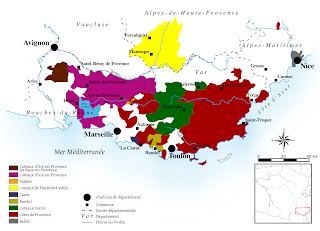
un petit séjour à la cote d'azur

Sunday was another epically gorgeous summer day here in Cleveland. I really don't know what we've done to deserve such a great summer this year. Regardless, it was the perfect setting for a poolside wine tasting with a good number of the folks from Bonjour Cleveland!, the French language Meet-up group I run.

Exploring the wine regions of France since February, our glasses have traveled nearly everywhere - Burgundy, Bordeaux, Alsace, Champagne, and the Loire. This month the group chose to sample the wines of southern France including Provence, Languedoc, and Roussilon (often considered together with the Languedoc). Hosted by George at his lovely home in the village of Chagrin Falls (quel drôle nom, eh?) we were anything but chagrined by the gorgeous garden, the sunny skies, and the lovely wines of the Côte d'Azur. (Note- technically the Côte d'Azur runs from Italy just into the Provence region... but hey, it sounds nice!)


Monday, June 1, 2009

Mineral-driven white from gravely Graves

Clos du Hez Graves (2007)
Clos du Hez
50% Sauvignon Blanc | 50% Sémillon
Graves AC, Bordeaux, France

While the red wines of Bordeaux, located in south western France, are famed as some of the best wines in the world, the region also produces excellent quality white blends. Produced in small quantities throughout the larger wine region, the best known white blends come from Graves, the only sub-region with a classification for dry whites. Sauternes, a smaller region within Graves, is famous for the production of sweet dessert wines using grapes which have been affected by Botrytis cinera, or Noble Rot. Grapes found in both sweet and dry wines are limited to Sémillon, Sauvignon Blanc, and Muscadelle.

As might be implied by the region's name, the soil type is consistently gravely. Left behind from glacial movement along with a quartz deposits, the soil takes a particular effect on wines. The concept of terroir, or a sense of place, is strongly considered all over France. The concept allows that not just grape variety and vinification methods are responsible for the final wines. Indeed soil types, weather, and climate bear their own influences. This said, you can always count on a good dose of minerality in dry whites from Graves.
Appearance: Clear, pale golden yellow wine. The color of watered down ginger ale is best thought of with this wine.

Nose: Clean nose with moderate intensity, displaying qualities of green fruit, pear, apple, grapefruit, and tart stone fruit. Additionally there is a balanced level of mineral aromas including slate, granite, or wet chalk.

Palate: Dry wine with fresh acidity, not unlike lemon spritzer. Light to medium bodied, medium alcohol, and moderately intense flavors all balance themselves well. Citrus and mineral qualities are predominant. Grapefruit, lemon, and grassy notes. A long finish from the acidity leaves an enjoyable, fresh taste of nectarine.
This particular bottle is produced using fifty per cent Sémillon and fifty per cent Sauvignon Blanc. The former tends to produce bland, low acid wines that pair well with oak aging while the latter creates intensely aromatic high acid wines. Blending the two wines together allows for better balance of each grape, and a richer overall experience. The grassy, austere qualities of Sauvignon Blanc are tempered by Sémillon, while the opposite lends aroma, higher acid, tones down alcohol levels. Sémillon is popularly grown in both South Africa and Australia while Sauvignon Blanc is grown all over the world, notably in the Loire, New Zealand, and Chile.

Whenever I have Sauvignon Blanc I crave Chèvre - this goat cheese is a perfect compliment to the grassy, citrus characteristics, and would pair well with this wine in particular. This light bodied wine would be perfect on it's own, before a meal, or paired with a light dish. Stick to citrus flavors as well as things like artichokes or asparagus.

Whether you're familiar with Bordeaux reds or not, I'd highly recommend giving a few of the white wines a fair shot. They offer a lot of flavor and much like the Clos du Hez, can be found inexpensively. Style is almost completely dependent upon the per cent of each grape found in the blend, but more importantly don't disregard the idea of terroir. Compared to similar blends found in the U.S. and other new world locales, there will be similarity but a definite difference overall.

Cheers!

Friday, March 13, 2009

portuguese blend with some unique grapes

Grão Vasco Red Wine (2004)
Grão Vasco/Sogrape Vinhos
Aragonês | Trincadeira | Alicanta Bouschet | Touriga Nacional | Jaen | Alfrocheiro Preto | Tinto Pinheira
Dão, PORTUGAL

Aside from Port, I don't think many people think of Portugal as being a major wine producing country. That or they often get lumped in with Spanish wines. This is certainly unfortunate especially because most of the still wine made in Portugal is made from native grape varieties. This Grão Vasco for example has (at least) seven different grapes in it, only a few of which I think I've actually had. I'll talk more about the different grapes below.

This blend was paired up with a light calamari dish I had served with mushrooms, citrus, and capers. Here's what I thought:
Appearance: Clear pale wine, bright ruby red in color.

Nose: Clean with some age development, soft to medium aromas of red fruit, cherry, raspberry. Complimented by deeper notes of violet, mint, tobacco, and leather.

Palate: A dry wine with medium alcohol, body, and tannin - it tightens your cheeks a little but then softly lets go. Flavors of raspberry and cherry paired with vanilla, smoke, spice, and a little yeastiness.
Overall this was a really nice pairing with the food because it is not super heavy. The wine was aged entirely in stainless steel as opposed to oak, so there wasn't a lot of added tannin, and those derived from the grapes were soft. The subtle earthiness paired well with the mushrooms, and the soft acidity complimented the orange zest and capers.

As for the grapes found in this blend, there are a couple that may be more familiar by other names. Aragonês is the Portuguese name for Spain's flagship grape Tempranillo. In fact this grape has a huge number of pseudonyms. Another familiar variety will be Jaen - known elsewhere as Mencía. This is the grape that started it all here at oe•no•phile in my first post!

Of all the grapes, Touriga Nacional is one of Portugal's primary grapes. In fact, the region this wine is from (the Dão DOC) requires at least 20% of a blend to be Touriga. It is also commonly used for making Port. Lending to the raspberry and spice is also Trincadeira, plus some added fruitiness and tanning from Alicante Bouschet. Finally, other characteristics including the mint are likely from Alfrocheiro Preto.

I would recommend this wine as a replacement for other light bodied reds - Pinot Noir, Sangiovese, or Gamay for example. Paired up with cheeses, light dishes, and even fish this would make a good table wine.

Cheers!