California Viognier (2007)
Lodi Syrah (2007)
Orleans Hill Winery
It should be noted that I'm going into this with severe bias against what I'm going to taste. I'm not an "
organic" wine advocate, but admittedly only in theory. Wines that claim to have "no sulfites" I think - how is that even possible? Fermentation produces
sulfites. And if there are no
added sulfites, then how long can the consumer be sure their wine is going to be stable to drink? And these bottles honestly say "
Vegan Friendly." Well, no isinglass or egg whites here!
That said, I'm setting aside my preconceptions, and I'm going to give these two organic, vegan-friendly California wines a shot. Like any other wine, they deserve to at least be tried. Here are my notes on each.
California Viognier (bottle notes "Contains Sulfites")
Appearance: Clear, with a beautiful vibrant golden yellow color. Think of fresh straw or hay in the Fall. Also, there was a noticeable amount of foaming when I poured. This was consistent even after the first pour, so maybe it has something to do with the production?
Nose: Clean, and very aromatic. Youthful aromas including apple, citrus, stone fruit, and floral. Yellow apple and floral at the top of the glass, with the apple changing from green to more yellow deeper into the glass. Also lower distinct notes of earthiness or minerality, and a hint of malolactic fermentation or oak.
Palate: Dry with medium alcohol and body. Flabby acidity that almost instantly fell away, and very subtle flavors. I really had to stretch to get even the most basic apple and citrus found on the nose, and there was a little bit of grassiness. Length was very short, lasting only a couple seconds.
Lodi Syrah
Appearance: Clear with medium intensity - I could see text through the wine, but it wasn't very clear. Eye-catching ruby color that was very bright in the glass and had a definite purple hue.
Nose: Clean with moderately intense youthful aromas - red fruit, spice, and oak. Cherry and cinnamon were very noticeable above the glass. Deeper in there was more pepper, clove, nutmeg, and fruit that was almost reminiscent of red licorice.
Palate: Dry wine with medium alcohol and body. Very flabby acid and light tannins. Flavors similar to aromas, but much more subdued: spice, pepper, and oak. Fruit was cherry with a little plum. Also herbaceous notes on the finish - short as it was - like eucalyptus or mint.
Overall I'm going to say both of these wines had awesome color and really great aromas, but both also fell short on the palate. With the pronounced floral and apple aromas of the Viognier, and the spiciness of the Syrah I was really expecting a lot more, but was sadly disappointed. Intensity of flavor, acidity, and length were all severely lacking in my opinion. In all fairness though I can't say this is because of their organic/vegan-friendly status; maybe it was a poor harvest.
Looking at the winery's website I found some more information on
organic wines (and the difference between those and wines made with organically grown grapes) as well as insight on the whole
sulfite topic. They address some key points regarding the shelf-life of their wines as well as describing how sulfites are measured. Further information on the regulations put in place by the government on organic products can be found at the
Agricultural Marketing Service's homepage
I'm totally impressed by the passion these guys put into their product and think the idea of growing organic grapes is cool. With the boom in the organic/natural/chemical-free lifestyle we've been experiencing in the U.S. they certainly have a place within the market. Unfortunately, I just don't care for these two wines, but that's not to say that someone else won't enjoy them - and at $9.99 a bottle I would recommend at least trying them or other wines in this category.
Cheers!


.jpg "6 grapes in 1 bottle")
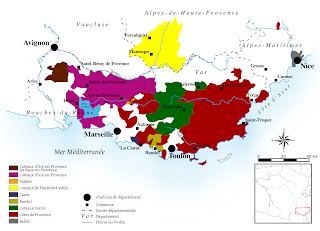 nearly everywhere - Burgundy, Bordeaux, Alsace, Champagne, and the Loire. This month the group chose to sample the wines of southern France including Provence, Languedoc, and Roussilon (often considered together with the Languedoc). Hosted by George at his lovely home in the village of Chagrin Falls (quel drôle nom, eh?) we were anything but chagrined by the gorgeous garden, the sunny skies, and the lovely wines of the Côte d'Azur. (Note- technically the Côte d'Azur runs from Italy just into the Provence region... but hey, it sounds nice!)
 Posts
Posts


