Earlier this afternoon I was surprised to find that my power of thought was stronger than I had assumed. I've been wondering for the last week or so when the weather was going to drop to that perfect temperature - 18°F for 6+ hours, aka "Cold" with a capital C - that signaled the time to rush out and pick frozen grapes for
ice wine. Usually the volunteer group that goes out isn't notified until well into the evening, and the harvest is more of a midnight till early morning hours rush to avoid the sun's thawing affects. This year the call came early in the afternoon and our glove-bearing hands were requested to be present at around 6pm.

This was my first year picking
Vidal Blanc and I convinced my roommate Dan to come along to help. We met up with the other volunteers out in Madison, which included a couple dedicated ice wine drinkers I had met earlier in the year, Kate and Michelle. The final group was comprised of well over twenty people including staff from
Grand River Cellars,
Debonné Vineyards,
South River Vineyard, and other volunteers. Below is a map of where we picked grapes - you can look at the satellite image to see the actual vineyard.
View Larger Map
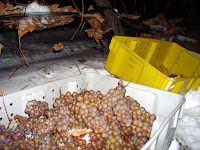
Being dark by 6, there were large lights placed on tractors bearing stacks and stacks of yellow and grey plastic bins. The four rows of grapes stretched into the darkness, snow six inches deep between the rows, each netted with black mesh put up to deter birds and other animals from snacking on the sweet fruit. We worked in sections, cutting the netting, plucking the cold solid bunches in handfuls and dropping them in our bins. As each was filled it was picked back up and taken to South River's nearby pressing room.
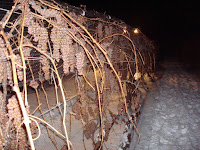
Traditionally made from grapes frozen on the vine, ice wines are a unique specialty the best of which come from Germany (
Eiswein) and in North America from the vineyards of New York, Ohio, and parts of Canada. In warmer climates, like California, similar wines can be produced by flash-freezing fruit, but to those picking frozen grapes this is regarded as cheating. A dessert wine made from a number of different white varietals - and also a few red varieties that create really interesting wines -
Eiswein is one of the
Prädikat levels that make up part of the insanely complex German wine regulations, which indicates a certain level of ripeness.
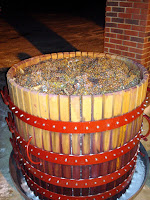
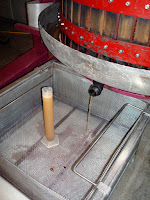
Back at South River we joined Gene, the vineyard manager and winemaker, who was monitoring the slow pressing process. The grapes are dumped from their bins into a large round container which is placed on the press. A mechanical process slowly crushes the grapes, allowing the sugar-rich juices to flow into a trough below but leaving behind most of the frozen water as well as all the deflated skins, stems, and seeds, or
pomace. This mass, called a "puck" - just imagine a giant grapey hockey puck - is later discarded in the vineyards where it decomposes as fertilizer.
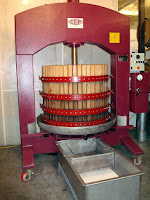
The juice is continuously tested for sugar content, or
Brix, which for this particular harvest was within their goal range at around 38°Bx. Gene allowed us each to sample the fresh juice which was sweet but at the same time possessed amazingly bright fruit flavors including peach, tangerine, and other citrus. The burst of aromas and tastes was almost surprising, and it's clear how the finished product can have such intense characteristics. The juice is then pumped into new containers where it will ferment. Aging will be completed in either casks or stainless steel tanks before it is bottled in the tall slender, oftentimes blue, 375mL bottles that seem like so little for so much. However, this experience really supports the $30+ price tags on many bottles of ice wine. The risk of leaving fruit to freeze, the hand picking in below 20°F temperatures, the slow and diligent process of pressing and testing the juice, and the significantly smaller yields are all contributors to cost - all before the wine is even made!
If you've never tried an ice wine I would certainly recommend picking one up. It really is a magnificent treat, and while enjoyable all on their own they can also make great compliments desserts like crème brûlée and cheesecake or even rich starters such as foie gras! Additionally, some wines will be affected by
Botrytis cinera, or
noble rot, and have unique honeyed characteristics and most likely a higher price tag. If you need any help justifying the expense drop me an e-mail and I'll make sure you're on next year's volunteer call list.
Cheers!
Check my Web Album to see all the pictures from our excursion.

Firelands Winery 2006 Isle St. George Cabernet Franc
Bogle Vineyards 2006 California Cabernet Sauvignon
 importantly it should be noted that both varieties are excellent to pair with foods, and so make great dinner wines. And if you enjoy dark chocolate I would highly suggest having some with either Cabernet. Overall Cab Franc appeals to people who enjoy dry wines that are lighter in body and not over the top fruity like some Cab Sauvignons can be. For those who really love “fruit bombs” as they are called or who want a fuller bodied wine Cabernet Sauvignon is just the thing.
 Posts
Posts


