Les Jamelles Cinsault Rosé (2007)
Les Jamelles
Cinsault
Pays d'Oc, France
So Valentine's Day is this weekend, and like so many others I'm writing about
rosés. Other than their pink color - gotten from letting the juice sit on the red skins very briefly - I don't really know what other relation or connection can be made to this holiday, but I do know one thing - I'm sick and tired of people trashing rosé! Now that might seem a little stand-offish, but seriously, these people need to knock it off. And apologies if you're one of them, but keep reading friends!
Let me say that I get the perception that some people have - "All rosés are sweet, and I don't like sweet wine." Thanks to
Sutter Home, American minds have been tainted by gallons and gallons of
White Zinfandel, and now anytime someone sees rosé that's their first thought. They clearly had a brilliant marketing team behind them to get that kind of product association, and if White Zin is all you drink then cheers to you too!
However, for any non-sweet drinkers, it's time to cut rosés some slack and belly up to the bar, so to speak. Oh, and just because it's pink doesn't mean it's a girly wine either - in fact this bottle of
Cinsault might be one of the "manliest" pink wines I've had!
Appearance: A clear wine, pink in color near salmon. Pale in intensity.
Nose: Clean, with medium intensity, and youthful aromas. Apple, raspberry, cherry, and pomegranate dominate the nose. Some stony minerality, strawberry, and rose round things out.
Palate: A dry, medium bodied wine with zingy acidity - mouth watering and refreshing. Medium intensity flavors of red cherry, apple, raspberry, and soft oak. Very slight fruit tannins that only linger for a moment.
Being a high-yielding, thick-skinned grape that is drought resistant, Cinsault is a big performer in the South of France (southern
Rhône, and
Languedoc-Roussillon regions) and it has also found a home in Africa, Australia, and the US. Typically blended with other local varieties it is a deep red wine that boasts a lot of fruit, and smooths other harsher wines out.
It is also used to make some outstanding dry rosés, wines that southern France should best be known for. With crisp, refreshing acidity these wines are perfectly fit for seafood and warm weather. This bottle of Jamelles was the perfect fit for a mushroom and Gruyere pizza I got at
Fire Food & Drink, a local favorite. The wine cut through the saltiness, and complimented the earthy mushrooms and sweet caramelized onions splendidly.
Historically rosés are meant to be dry - white Zin was a lucky mistake - and can range from light and easy to very complex wines. For the doubters out there I can also recommend rosés produced from
Grenache,
Sangiovese, and
Syrah. Here are some of my favorites:
Barnard Griffin Rose Of Sangiovese (WA)
Trentadue Winery Grenache Rose, Monte Lago Vineyards (CA)
Tsantali Roditis (Greece)
Château Pavie Macquin Rosé (BDX, FR)
Hope this has inspired - or at least goaded - you to run out and find a rosé to try. Sure, I maintain not everyone is going to enjoy them, but don't write them off before you've tried them all!
Cheers!
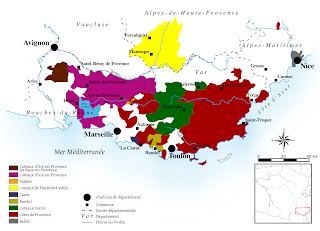 nearly everywhere - Burgundy, Bordeaux, Alsace, Champagne, and the Loire. This month the group chose to sample the wines of southern France including Provence, Languedoc, and Roussilon (often considered together with the Languedoc). Hosted by George at his lovely home in the village of Chagrin Falls (quel drôle nom, eh?) we were anything but chagrined by the gorgeous garden, the sunny skies, and the lovely wines of the Côte d'Azur. (Note- technically the Côte d'Azur runs from Italy just into the Provence region... but hey, it sounds nice!)


 Posts
Posts


